Amazing
The Re-appearing Aussie Pink Handfish
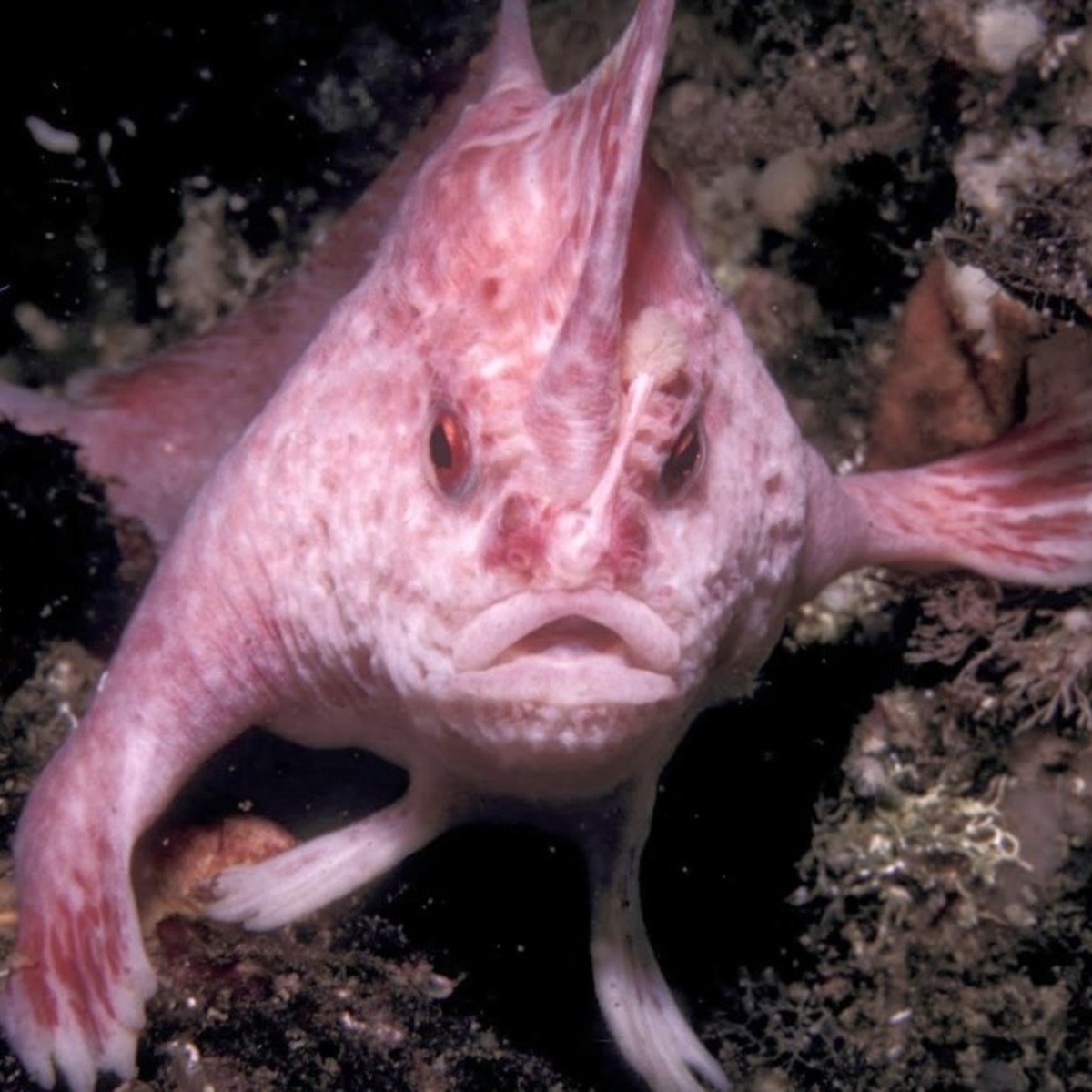
A good number of species have gone extinct in the 19th and 20th centuries thanks to humans, development, and lack of awareness of what change can do to an ecosystem. However, fortunately, one species somehow managed to make a comeback, which was a surprise to a lot of biology experts and fish specialists. The Australian Pink Handfish was thought to have seen its last swim more than two decades ago. The extremely rare fish was last seen in the waters off coastal Tasmania, and was assumed to have died off after 1999.
Alive by Terminology Only
While officially the Pink Handfish was technically labeled “endangered,” no one had seen the species for years in the water. However, running a monitoring exercise with a deep sea camera in a marine sanctuary, researchers were once again able to confirm the fish’s delicate but clearly present existence in the Australian ocean. Interestingly, the fish managed to find survival going deeper into the water than it had historically been found. So, while folks no longer found the species at its old depth, it was clearly present and healthy down deeper where there was less human activity and encroachment. At 150 meters under the surface, it’s not likely to get much irritation from regular diving or boating.
Time to Rewrite the History Books Again
Researchers were also puzzled and began opening up new options for possibilities with the Pink Handfish as well. It was simply assumed the species was a shallow water fish and would not function or survive at deeper levels. Obviously, the prior research was incorrect. Unlike regular fish that generally swim, the Pink Handfish has a walking habit, using its front fins to claw and grab coral as it walks across the sea floor. While it can definitely swim, the species relies on walking activity for a closer inspection of food sources and discovery.
Food is a Good Standby for a Party
Researchers regularly use bait and cameras to pick up local activity where they film, capturing images of the local fish and sea life lured by the easy food availability near the camera. Dropping a deeper water camera into the Tasman Fracture Marine Park at the floor level of the water, the goal was to get a good visual of crustacean sea life and bottom dwellers. Much to the surprise of the researchers, when they reviewed the film, there was an additional food forager in the mix no one expected. A fully-grown adult Pink Handfish showed up after it got a nudge from a rock lobster in the same area. The Handfish didn’t get too involved, checking out the food flurry and then swimming away quickly, but specialists were able to confirm the species. It stood out so distinctly from the other fish and sea life, the Handfish was hard to miss.
So, officially, the Pink Handfish has now been confirmed to still be alive and definitely endangered, but in a positive state versus what everyone thought for more than 20 years to the opposite.
Amazing
Mother and Daughter Graduate Nursing School Side by Side—Two Years After Mom Donated Kidney to Save Her Life

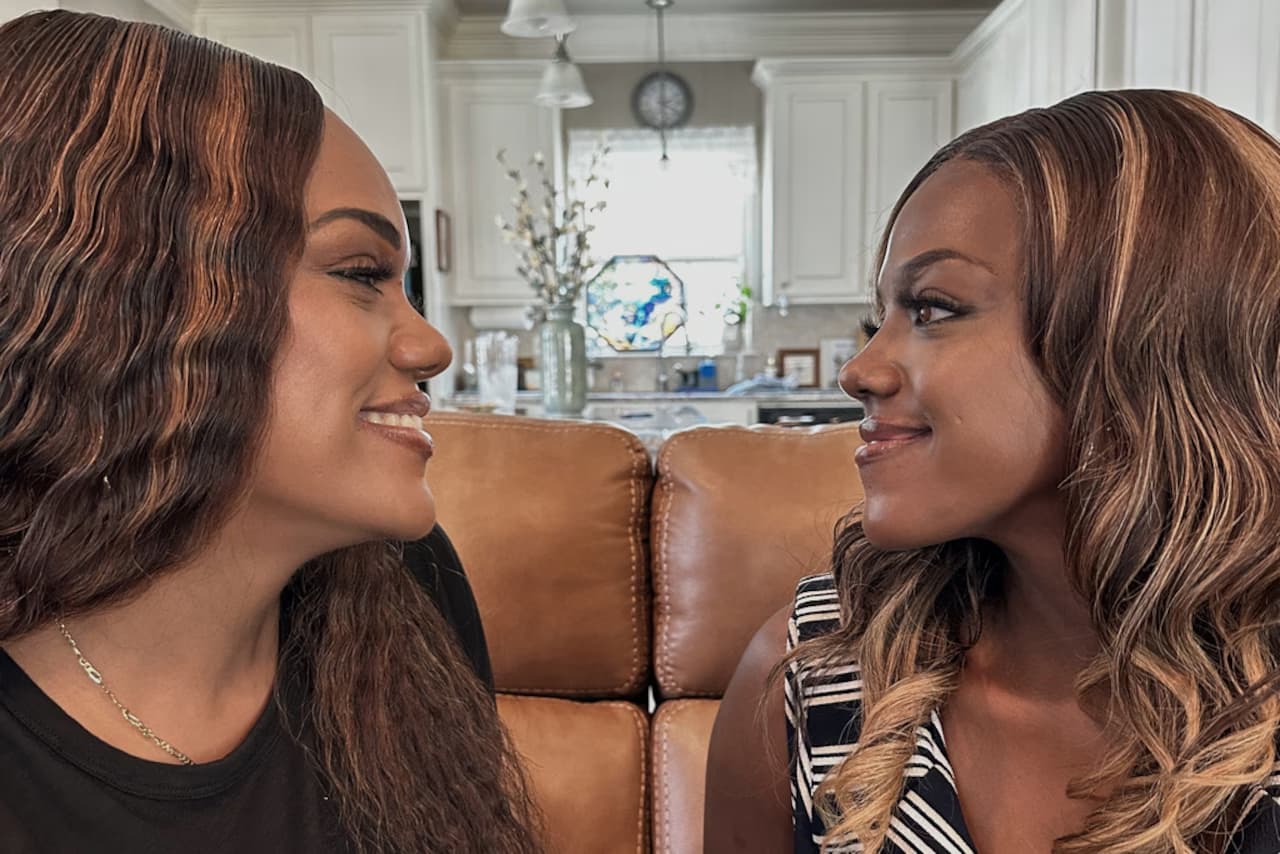
In a story of grit, love, and second chances, a mother and daughter crossed the graduation stage together this spring—just two years after one saved the other’s life.
Ambrealle Brown, 34, dreamed of becoming a nurse. But that dream came to a halt in 2016 when she was diagnosed with Focal Segmental Glomerulosclerosis (FSGS), a rare and progressive kidney disease that forced her to leave school and rely on daily dialysis treatments lasting up to 13 hours.
As her condition worsened, Brown’s optimism faded. She was exhausted—physically and emotionally. The long wait for a transplant weighed heavily on her, and hope felt increasingly out of reach.
But her mother, Nija Butler, wasn’t ready to let her daughter give up. Although doctors initially said she likely wasn’t a donor match, Butler quietly went in for testing. She didn’t tell her daughter—she didn’t want to raise hopes unless it was certain. Then came the call: Brown had a match.
“She told me she was getting a kidney,” Butler recalled. “And I told her, ‘It’s me.’”
In March 2023, surgeons at Tulane University performed Louisiana’s first-ever robotic kidney transplant, using a minimally invasive technique that helped speed recovery for both women. With her new kidney and a renewed lease on life, Brown returned to nursing school. Inspired by her daughter’s determination, Butler decided to join her.
For the next 16 months, they studied side by side, pushing each other through the grueling demands of their program at Baton Rouge General School of Nursing. And in April, they both graduated—together.
“I couldn’t have done it without her,” Brown said. “Nursing school is hard, and having her by my side made all the difference.”
Brown is now set to begin work in a burns intensive care unit. Butler, 48, will continue her work in psychiatric care.
The two women hope their story encourages others to never lose hope—and to consider the lifesaving power of organ donation.
“As parents, we always say we’d do anything for our children,” Butler said. “And I meant it—with all my heart.”


In a stunning leap forward for vision science, researchers have unveiled a color no human has ever seen before. The new hue—named olo—is described as an intensely saturated blue-green that falls outside the boundaries of the natural human color spectrum.
Published in Science Advances, the study comes from a collaboration between scientists at the University of California, Berkeley, and the University of Washington. At the heart of the discovery is a new experimental tool dubbed Oz, a laser-based system that allows researchers to stimulate individual photoreceptors in the human retina with unprecedented precision.
“The Oz system represents a new experimental platform in vision science,” the study states. It works by isolating and activating just one type of cone cell—specifically, the M cones responsible for detecting green light—while bypassing the other two (S and L cones, which are sensitive to blue and red light, respectively). This kind of targeted stimulation isn’t possible under natural viewing conditions, where any light usually activates multiple types of cones at once.
In controlled experiments using laser light directed into the eyes of five participants—all with normal color vision—scientists were able to generate a perceptual experience unlike anything in nature. By activating only the M cones, participants reported seeing a blue-green shade that felt completely novel and extraordinarily vivid.
“By activating only the M cones, we elicited a color beyond the natural human gamut,” the researchers wrote. They described olo as a color of “unprecedented saturation.”
This discovery doesn’t just expand our understanding of color—it could also have practical implications. The Oz platform may pave the way for more advanced research into visual processing, new treatments or diagnostic tools for color blindness, and potentially even new types of displays capable of showing colors previously thought impossible to reproduce.
As the study concludes, “This new class of programmable platform will enable diverse new experiments,” including deeper exploration into how flexible and adaptable human color perception really is.
With olo, the boundaries of the visible world just got a little wider.


When Nick Harding lost the ability to skateboard, he never imagined he’d find a new way to stay connected to his lifelong passion — through art.
In 2019, Nick was suddenly paralysed by Guillain-Barré syndrome (GBS), a rare auto-immune condition where the immune system attacks the nervous system. What started as a sore hamstring quickly escalated into a medical emergency. Within an hour of arriving at the hospital, he was on life support. He spent 13 weeks in intensive care at Southmead Hospital in Bristol and seven months in recovery, relearning how to walk and use his arms.
“Skating has always been a huge part of my life,” Nick said. “Having an outlet for that desire to play with my favourite toy is what brought the sculptures about.”
With his old decks stacked in a corner and his body still rebuilding strength, Nick began experimenting. His early attempts to make practical items were shaky — his hands lacked coordination — so instead, he focused on creating something beautiful. With no prior carpentry experience, he turned to YouTube tutorials, teaching himself to shape, sand, and finish colorful, psychedelic forms from the layered wood of worn-out skateboards.
The process helped rebuild his dexterity, but it also served as a mental anchor. “I just focused on doing a little bit every day,” he said. “It was the process that felt good when I was at my lowest.”
Now, Nick sells his sculptures through his Etsy shop Mobius Maples and has gained fans from around the world. His pieces — all carved from donated, broken, or retired boards — are abstract, swirling forms that capture the movement and spirit of skateboarding.
But for Nick, it’s not just about the art or even the recovery. It’s about staying connected to the Bristol skate scene that shaped him. He donates pieces to skate competitions and charity auctions and even hides small keychains around the city for his Instagram followers to find.
“It wouldn’t be anything if it was just me,” he said. “It’s also people who give me their old boards. Interacting with the art and letting me be involved with things is what’s kept it going.”
“I want it to be something that adds to the community, and I’m so grateful that I still have the opportunity to do that.”
Through creativity, community, and resilience, Nick Harding has transformed adversity into something both healing and inspiring — turning the boards that once carried him across pavement into lasting works of art.
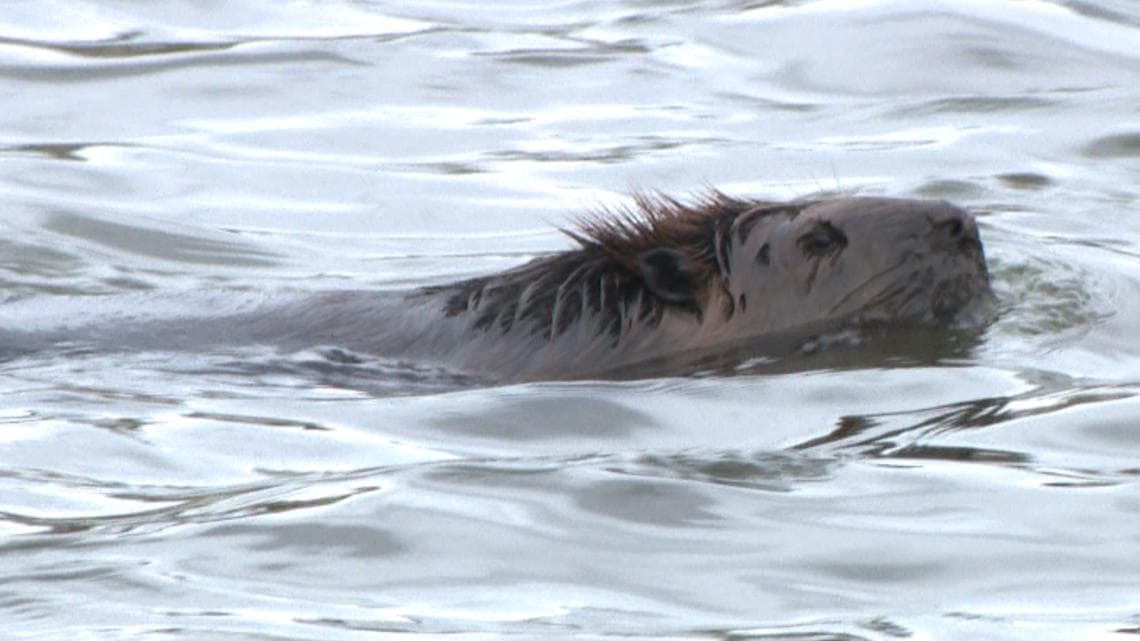
Wally, a beloved beaver who became a community favorite in Northern Virginia, was saved from euthanasia thanks to the efforts of thousands of supporters who rallied together through an online petition.
Wally first gained popularity at Huntley Meadows Park in Fairfax County, where locals and visitors often saw him hard at work building dams. However, wildlife officials considered euthanizing him after concerns arose over flooding and tree damage caused by his dam-building activities.
The community swiftly stepped in, launching a petition that quickly gathered over 10,000 signatures. Advocates argued that the beaver’s positive impact on the ecosystem—creating wetlands and habitats for other wildlife—far outweighed any inconveniences.
Local officials eventually agreed, opting instead for a humane relocation effort. Wally will now be safely moved to a suitable habitat rather than being euthanized.
“This shows how much our community values wildlife,” said Julie Ames, the petition’s creator. “We’re thrilled our voices were heard.”
Residents celebrated the decision, highlighting how Wally’s survival symbolizes the growing awareness of peaceful coexistence with local wildlife.
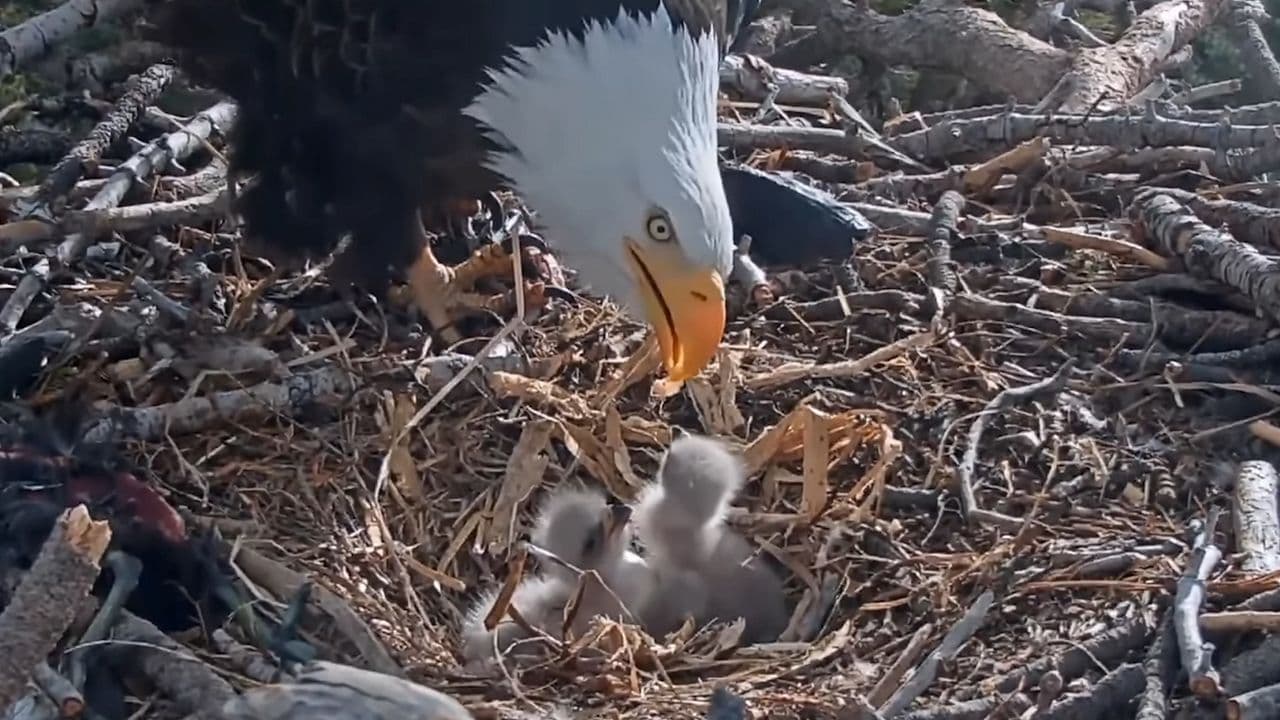
A third eaglet hatched yesterday in the much-loved bald eagle nest near Big Bear Lake, marking a delightful moment for the growing number of wildlife enthusiasts who have been closely watching the family online.
The nest, located in the San Bernardino National Forest near Big Bear, California, has been streaming live via the Friends of Big Bear Valley eagle cam. Observers were excited to witness the third chick hatch, a significant event considering that bald eagles usually lay two eggs, with three being somewhat unusual.
The parents, affectionately named Jackie and Shadow, are local celebrities among bird watchers. According to the Friends of Big Bear Valley, these parents have gained fame for their caring behavior, ensuring their chicks remain healthy and thriving despite the occasional harsh weather conditions.
“The hatch was smooth and perfectly timed,” said Sandy Steers, executive director of Friends of Big Bear Valley. “It’s heartwarming to see this family continue to flourish.”
Wildlife experts emphasize the importance of maintaining a respectful distance, reminding the public that the best way to enjoy and protect these birds is by observing remotely via the eagle cam.
Viewers can continue to monitor the eaglets’ development, celebrating each milestone as the chicks grow into young eagles over the coming weeks.
-

 OMG7 years ago
A Couple Gave Birth to the Most Beautiful Twins Ever
-

 OMG8 years ago
20 Rare Historical Photos
-

 OMG7 years ago
Hilarious Airport Photos
-

 Cute7 years ago
Mom Refuses to Let Daughter Eat Sugar and Years Later This is What She Grows Into
-

 OMG7 years ago
Top Secret Air Force One Facts That You Never Knew
-
OMG7 years ago
The Funniest Yearbook Photos Of All Time
-
 OMG8 years ago
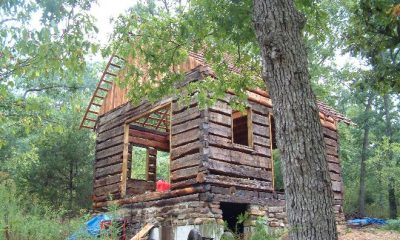
Retired Mathematician Restores Log Cabin
-

 OMG6 years ago
What Happened When This ‘Duck Dynasty’ Legend Chopped Off His Beard?